It's been too long since I last posted, and too long since I did anything productive in the garden. I wanted to take a few pics to show how the veggies and fruit trees are doing this month. Temperatures have definitely cooled off (40s at night) which, not surprisingly, has helped the fall crops tremendously. Surprisingly, some of the other plants are also still hanging on as if it is summer. I recently ate a fig and had a few handfuls of Heritage raspberries! Not quite the same quality or taste as during the peak season, but certainly better than anything I can find in the store!
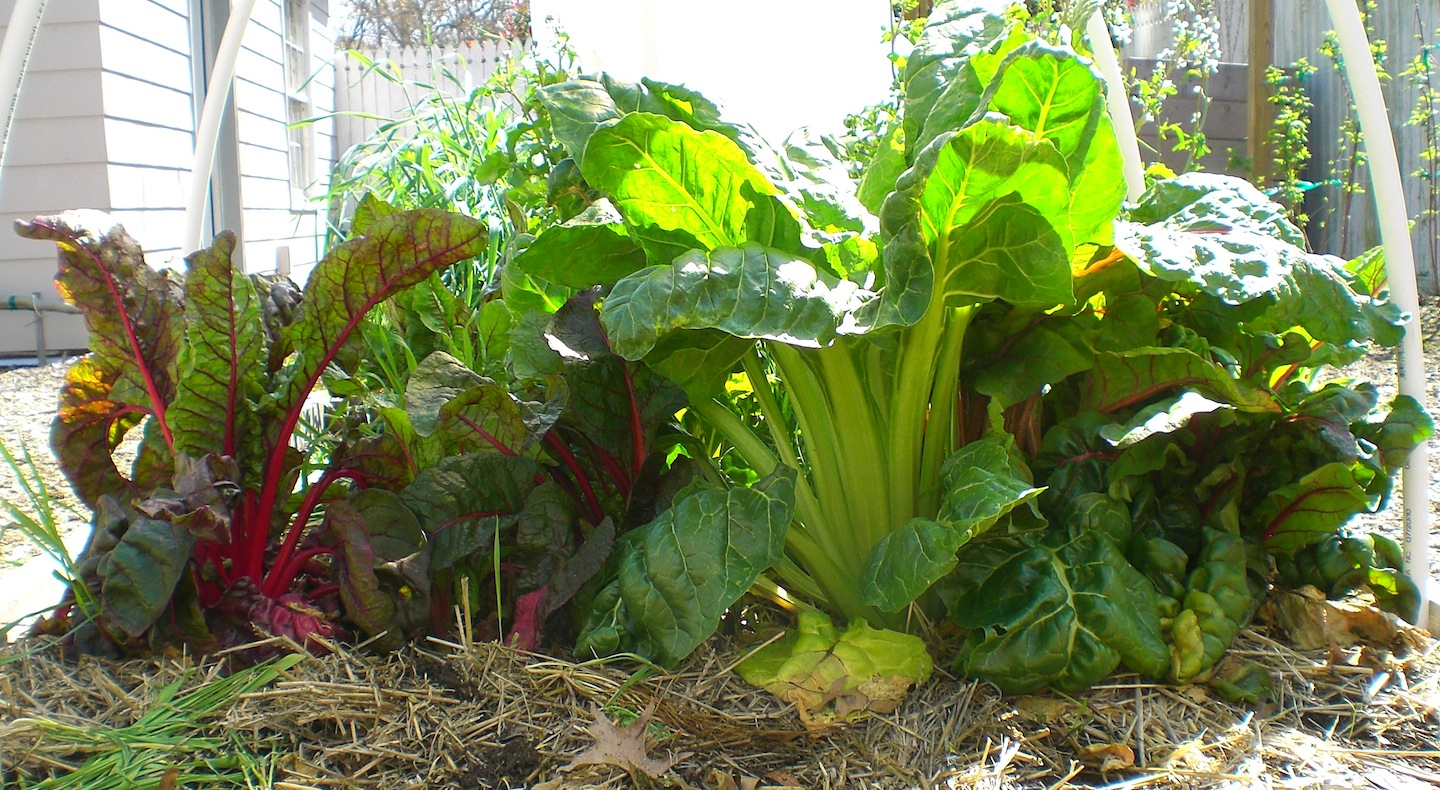
Swiss chard has been the big winner this fall. Again, I've never planted it before this year but it is doing very well and tastes outstanding. I haven't had any bug problems either. A great no care plant that produces huge stalks of chard. Hopefully they'll hold up well when the first frost hits the area.
 |
| These chard plants are appx. 18" tall. Simply twist and pull off shoots of chard at the base of the plant and it will continue to grow from the crown. |
Carrots are a close second (if not tied) with chard in terms of success. This is my first year growing carrots and I'm proud of the results, even if I was lucky. I planted 8 varieties in a 4' x 8' bed. Mostly French heirloom varieties (thanks Elsa!) and a few American hybrids. I harvested a sampler of each variety but forgot to take pics before I ate them. I'll try to do that the next time I pull some from the bed. But here's an overall picture. Major difference compared to the picture of the tiny seedlings I previously posted.
 |
| American and French carrots reaching for the sky and growing deep in the raised bed. I also inter-planted a few rows of purple onions to help reduce white fly. Guess it worked because they were never a problem. |
Lettuce has been a huge disappointment. I don't know if it was the late hot temps or the fact that my seeds were a few years old, but I've had miserable results this year. I planted an entire 4' x 8' bed with 5 varieties and have only 6 small heads to show for it. I was hoping for endless salads, but got endless heartbreak instead. They are growing rapidly, but it is a sad sight. Here's a pic of one lonely head looking pretty for the camera.
 |
| Winter Density lettuce. |
Kale has been hit or miss. It seems to be growing okay now, but I was battling with small caterpillars that really enjoyed munching on the green leaves. They were efficient too! A few plants were totally decimated. I saw white moths (maybe butterflies? I don't know, not a bug guy) fluttering over the plants and figured they were laying their eggs on the kale. It would probably help if I researched this a bit. I ended up hand-picking the buggers every day and doing the old stomp dance. I haven't seen any in the last 3 days so I hope I'm in the clear.
 |
| Bed of two different varieties of kale (dwarf blue curled and Vates). I planted three stray Egyptian walking onions in the foreground. I also inter-planted the kale with radishes. Thanks again to Elsa for providing tasty radish seeds. Her grandfather's heirloom radishes from his garden in France are the best! |
What about the young fruit trees, you ask? The potted citrus are still going crazy. Limes galore, lemons are ripening, and the tiny calamondin oranges are harvested daily. I'll move them by the window inside the shed when frost threatens, and if temps get really cold I'll move them inside the house. But believe it or not, my three citrus plants survived 48 hours of temps in the low 20's inside my unheated shed last winter. So maybe they are hardier than people give them credit for, but I'm not taking any chances this year. I'd hate to lose them, particularly after being rewarded with fresh citrus.
 |
| Calamondin oranges (bottom) and Eureka lemons (top). Looking forward to harvesting those lemons. |
My Russian pomegranate tree is starting to thrive. It was a potted plant (
Edible Landscaping) for 4 years before I planted it in the ground. This year I was rewarded with 4 small-ish pomegranates and prolific growth of the plant. I'm hoping this means that next year I'll be swamped with pomegranates.
 |
| Two small Russian pomegranates and one really fat thumb. |
 |
| 6-foot tall pomegranate tree. If you look closely (with a magnifying glass) you'll see 3 small pomegranates at ground level. Next year I've got visions of this shrub loaded with reddish globes. |
The peach tree grew fairly well this year. I had lots of pink blooms in the spring and about 10 peaches mid-summer. They were a bit on the dry and hard side, but I think that's because we had very little rain and unfortunately I didn't water the tree very much. The tree is about 8 feet tall now, so I'll probably prune it in early spring to keep fruit within reach (and spray it with dormant oil this winter).
 |
| Redhaven peach tree on semi-dwarfing rootstock. Looks like I've got some weeding and mulching to do. Any volunteers? |
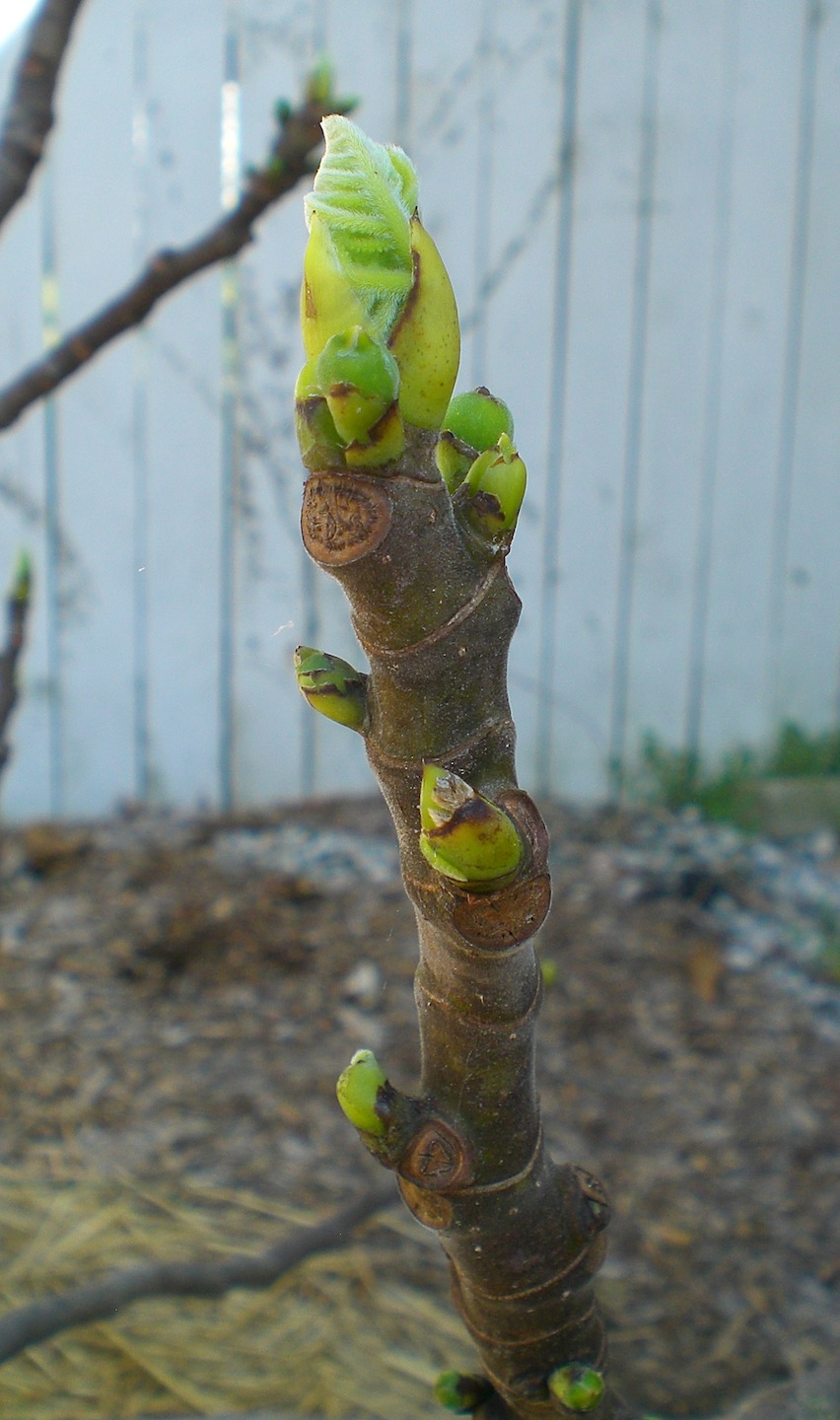
Of course this post wouldn't be complete without another shameless plug for my fig trees. My espalier-in-progress thrived near the shed and grew from a little cutting to over 6-feet tall. And the cuttings from my aunt and uncle's ancient Celeste fig tree located in Virginia Beach did great as well. I started 25 cuttings this spring and now have 22 Celeste fig trees ready for sale next spring. I put a 4-foot measuring stick in both pictures for scale.
 |
| Espaliered fig against the corner of the shed. The lower laterals reach out at a 90-degree angle from the trunk against both sides of the shed. I'm going to pull down the upper laterals this winter and slowly bring them horizontal with the lower laterals. |
 |
| 22 Celeste fig trees that I rooted earlier in the year. Pretty good results for one growing season. |
That pretty much sums up the status of the yard as we begin the second week in November. Notice I've had very little luck killing the grass. I'm still going to continue my attempts to smother it with cardboard and mulch. I don't want to resort to chemicals just so I don't have to mow the lawn. Also worried that any herbicides would harm my fruit trees and veggies. If so, that's not an option. Drop me a line and let me know how your gardens are doing as we transition into cooler weather.